
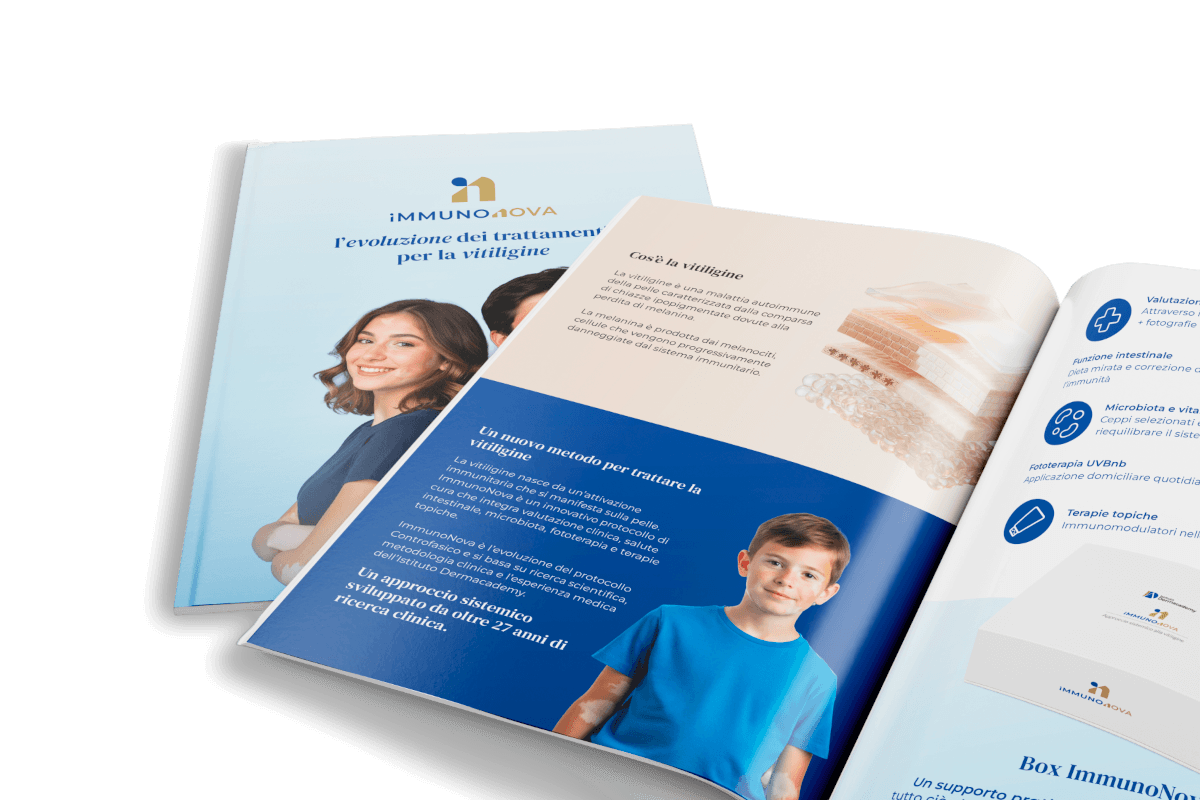
Treating vitiligo

Going deeper into the understanding of the disease to act on its immune roots and improve skin manifestations.

FAQ

Yes, vitiligo can be effectively treated, although there is currently no universal definitive cure. The most advanced protocols combine phototherapy, topical therapies, and interventions on the immune system to stop the progression of the disease and promote repigmentation. At the Dermacademy Institute, the ImmunoNova Protocol has documented clinical improvement in 84% of the 4,136 patients treated over the last 8 years.

Yes. Vitiligo is now recognized by the scientific community as an autoimmune disease, in which the immune system attacks and destroys melanocytes, the skin cells responsible for melanin production. For this reason, effective treatments do not only act on the skin, but also intervene in immune system balance, the intestinal microbiota, and vitamin D levels.

Vitiligo has a significant genetic component. International scientific literature reports that 20–30% of patients have a family history of vitiligo. Clinical data collected at the Dermacademy Institute from a case series of more than 4,000 patients confirm this estimate, indicating a percentage of 28%. However, inheriting a predisposition does not necessarily mean developing the disease: genes are only one of the factors, together with stress, skin trauma, immune imbalances, and environmental factors, that may contribute to triggering depigmentation.

No. Vitiligo is not contagious in any way. It cannot be transmitted through physical contact, sharing objects, water, or air. It is an autoimmune skin condition and does not pose any risk to people who are close to someone affected by it.

The first signs of repigmentation generally appear within 3 months in 72% of cases, although the response varies depending on the area of the body, the extent of the patches, and the activity of the disease. The face and neck tend to respond more quickly, while the hands, feet, and peripheral areas require longer treatment times. A complete treatment journey may last from 6 months to several years, with periodic monitoring to adapt the therapy as needed.

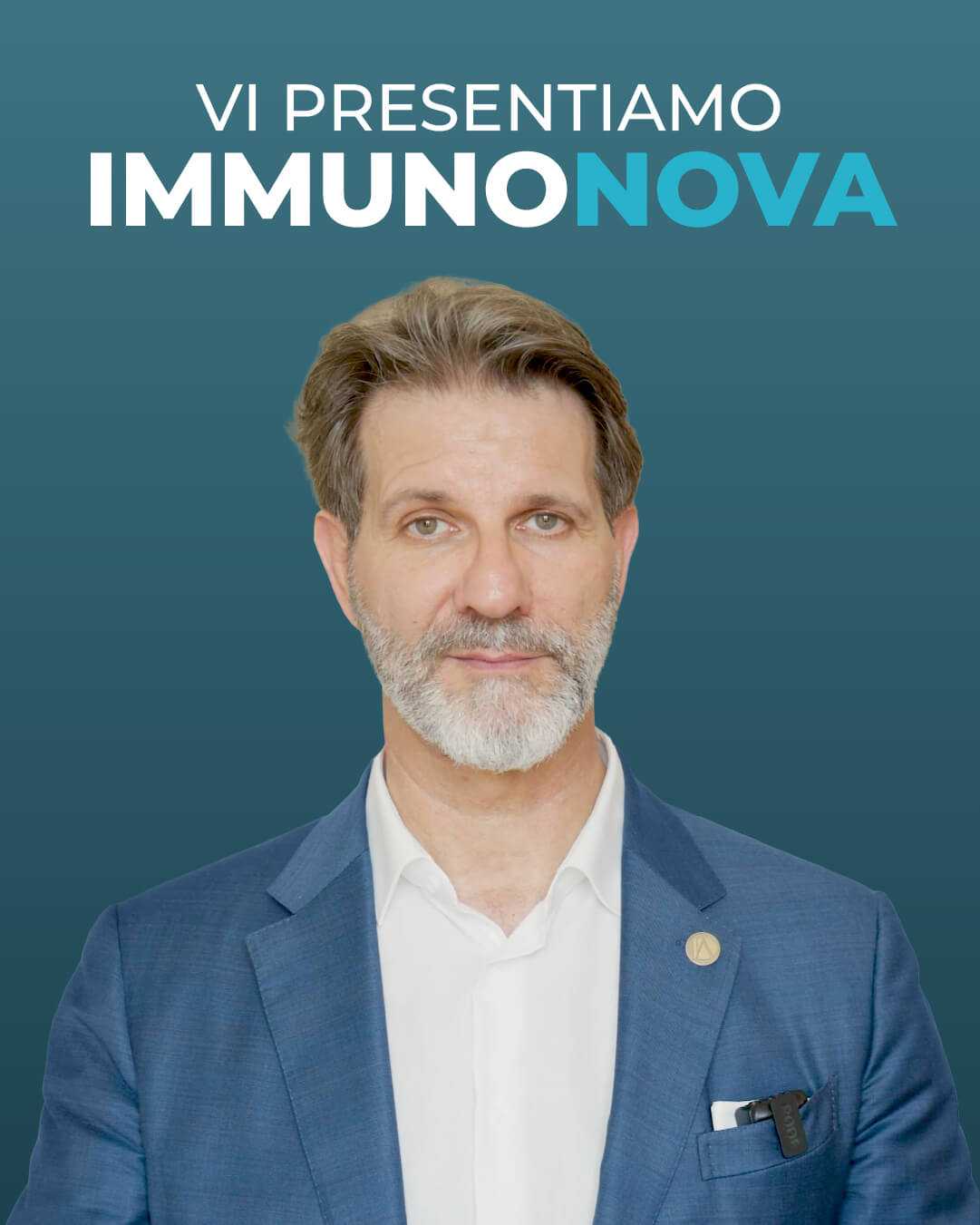
ImmunoNova is an integrated therapeutic protocol developed by Dr. Giovanni Menchini for the treatment of vitiligo. It is based on five pillars: clinical evaluation with the Vitiligo Activity Index and Wood’s lamp, correction of gastrointestinal dysfunctions, rebalancing of the microbiota and vitamin D levels, home-based narrowband UVB phototherapy, and targeted topical therapies. It represents the evolution of the Controfasico protocol and is the result of 26 years of original clinical research.

Yes, narrowband UVB phototherapy is considered one of the safest and most effective treatments for vitiligo, and it is recommended by the main international dermatological guidelines. Unlike uncontrolled sun exposure or tanning beds, it uses targeted wavelengths (311 nm) that stimulate repigmentation without the risks associated with UVA radiation. In the ImmunoNova Protocol, it is carried out at home under medical supervision to ensure continuity and safety.

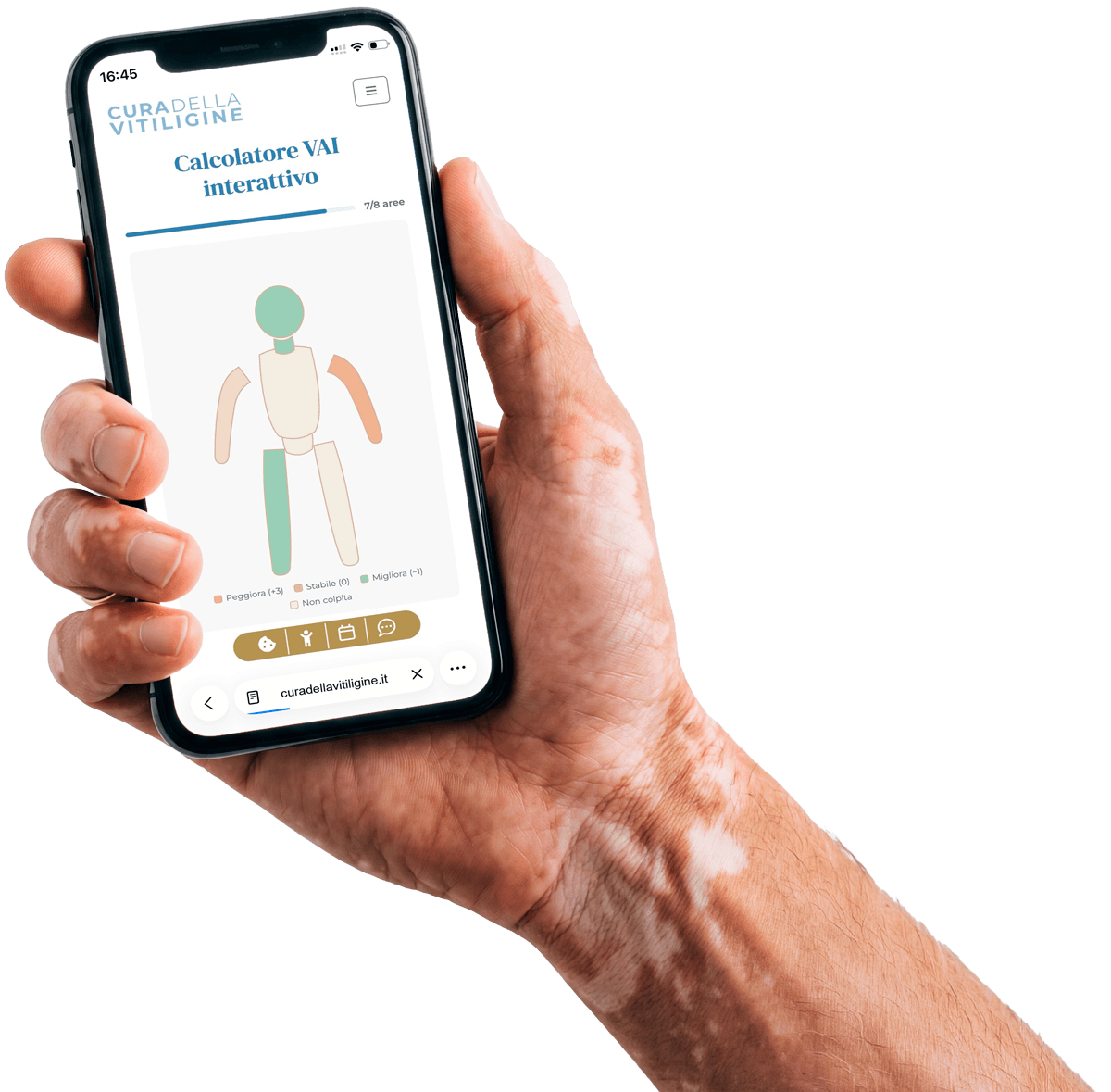
The cost of a therapeutic treatment path for vitiligo depends on the duration, the extent of the disease, and the chosen protocol. An initial evaluation includes a specialist consultation, medical history review, Wood’s lamp examination, calculation of the Vitiligo Activity Index, and a personalized prescription. Subsequent follow-ups are scheduled every 2–3 months according to clinical progress.

Vitiligo can appear at any age, but it tends to develop early in life. Clinical data collected at Dermacademy from more than 2,000 first consultations and medical histories indicate that 40% of patients develop vitiligo before the age of 20, often during adolescence or childhood. In young patients, the disease tends to respond better to treatment than in adults, especially when treated early. It is essential to consult a center with specific experience in pediatric and juvenile vitiligo, because therapies must be adapted to the patient’s age, skin, and emotional context.

The initial consultation can be booked directly online through the dedicated booking system, or by contacting the Dermacademy Institute at +39 050 8068110. The consultation includes a medical history interview, Wood’s lamp examination, VAI assessment, prescription of a personalized therapy, prescription of blood tests, and delivery of a USB drive containing the patient’s clinical documentation.

Wait a moment

Cura della vitiligine
Offline