What is vitiligo
Vitiligo is an autoimmune disease of the skin characterized by the appearance of hypopigmented patches caused by the loss of melanin.
Melanin is produced by melanocytes, cells that are progressively damaged by the immune system.
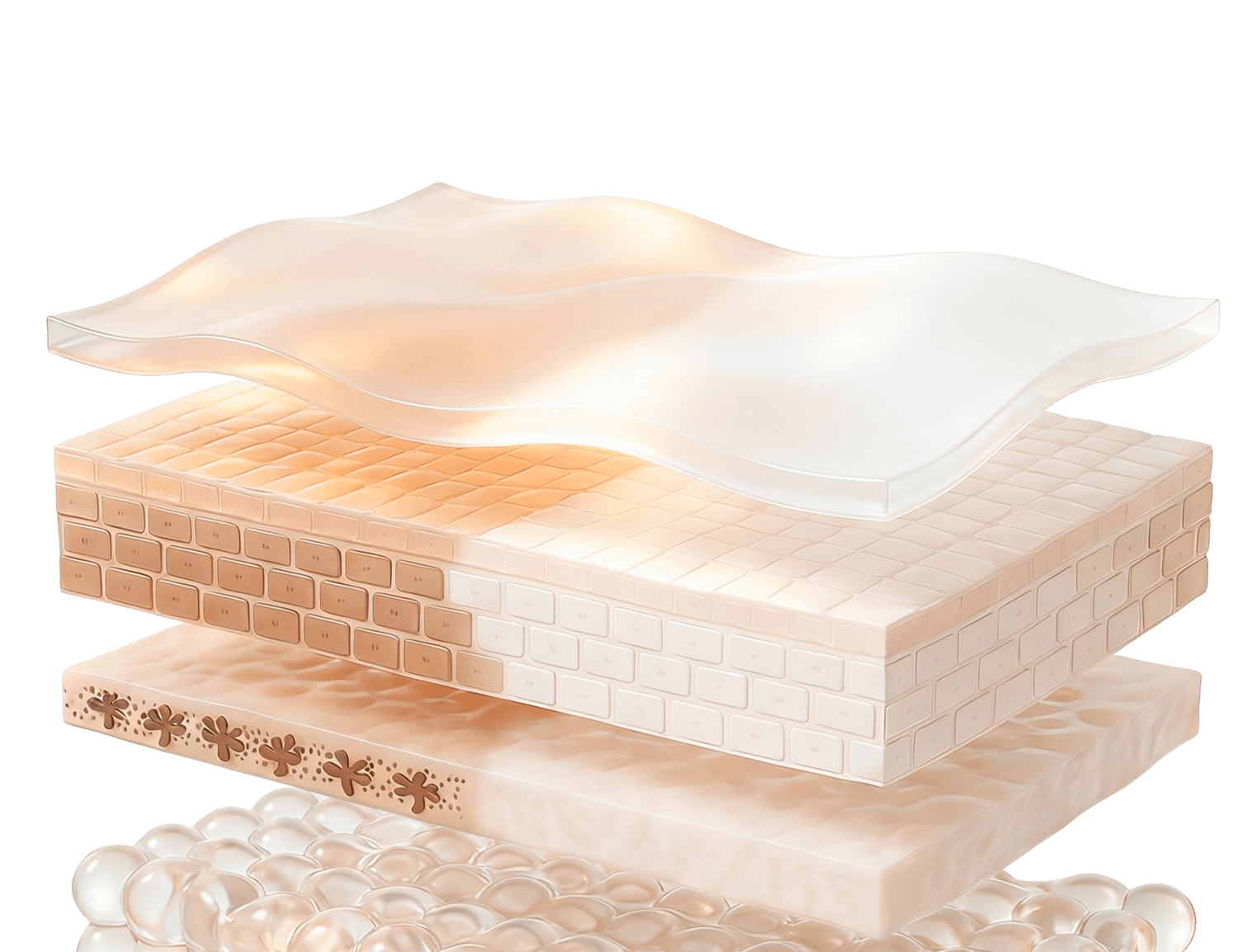
Vitiligo: beyond the skin
Vitiligo is not contagious, not infectious, and affects approximately 1% of the world’s population, with no significant differences related to sex or ethnicity.
It can appear at any age: in 36% of cases, onset occurs before the age of 15, but it is not uncommon for the first patch to appear in adulthood or later in life.
Contrary to what was believed for many years, vitiligo is no longer considered a simple skin alteration, but rather a systemic immune-mediated disease, in which the skin represents the visible target of a more complex process.

The exact causes of vitiligo cannot be attributed to a single factor. It is now established that the disease develops through autoimmune mechanisms in predisposed individuals, with a loss of immune tolerance toward melanocytes.
In most cases, no single triggering event can be identified.
In a minority of patients, onset may be associated with:
- intense and prolonged stress
- oncological or radiological therapies
- events that significantly alter immune balance
Family history is present only in some patients and does not follow a direct genetic pattern.
The more than twenty years of clinical experience of Dr. Giovanni Menchini and his team confirm that, although the genetic component is present, it is not sufficient on its own to explain the onset of the disease.
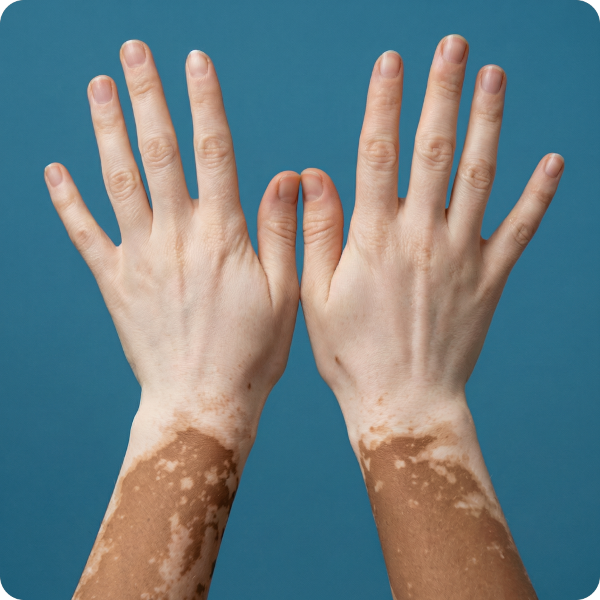
The characteristic clinical sign of vitiligo is the appearance of white patches on the skin, caused by the loss of melanocytes and therefore of melanin.
The following may also be associated:
- white hair or body hair in the affected areas
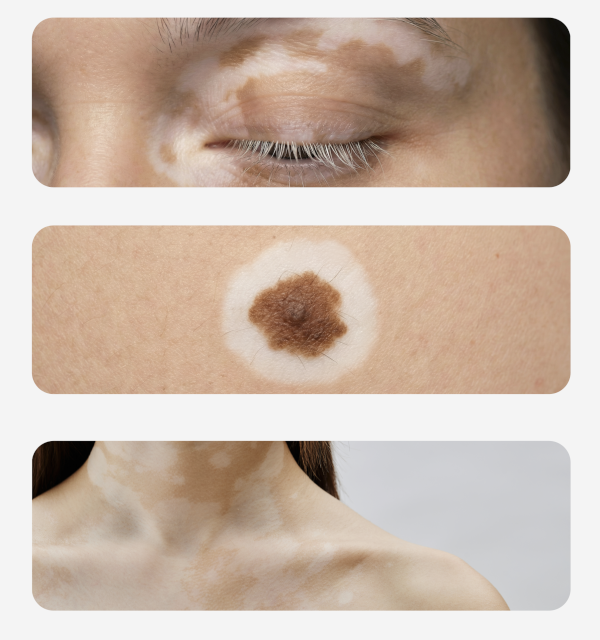
- Sutton halo nevi (moles surrounded by a depigmented halo), present in approximately 30% of patients
- progressive hypopigmentation in areas initially not involved
The most frequently affected areas are:
- face
- hands and feet
- genitals
- periarticular areas
The course of the disease is unpredictable, with phases of activity and phases of relative stability.
Bilateral vitiligo (or vulgaris)
It is the most common form and accounts for more than 90% of cases.
The patches are distributed symmetrically on both sides of the body.
Based on distribution, the following types are distinguished:
- acrofacial vitiligo
- genital vitiligo
- generalized vitiligo
- mucosal vitiligo
- perinevic vitiligo (halo nevi)
In most patients, the extent is limited: more than 50% show involvement of less than 10% of the body surface area.
Segmental vitiligo
It accounts for approximately 10% of cases.
It is characterized by patches localized in a single body segment, often with rapid and early distribution.
This form:
- is less frequently associated with other autoimmune diseases
- has a rapid initial progression
- shows greater long-term stability once repigmentation is achieved
Mixed vitiligo
It does not represent an independent form, but rather the coexistence of segmental and bilateral characteristics in the same patient. It is uncommon but clinically relevant for therapeutic management.
Diseases associated with vitiligo
Vitiligo may be associated with other autoimmune diseases.
The most common are:
- Hashimoto’s thyroiditis
- celiac disease
- atrophic gastritis
- autoimmune diabetes
- chronic urticaria
- mood disorders
Among these, Hashimoto’s thyroiditis is the most common, especially in women over the age of 40.
For this reason, in patients with vitiligo, periodic endocrinological monitoring is recommended, even in the absence of symptoms.
How is vitiligo treated today
Vitiligo is a systemic immune-based disease and must be treated as such.
Vitiligo cannot be effectively treated by acting only on the skin. Exclusively topical or cosmetic therapies do not address the mechanism underlying the disease and are not able to prevent its progression.
The ImmunoNova Protocol
The ImmunoNova Protocol represents the most advanced evolution of the research and treatment pathway developed by Dr. Giovanni Menchini and his team.

The goal is not only the repigmentation of existing patches, but also:
- the stabilization of the disease
- the prevention of new lesions
- the reduction of the risk of progression and autoimmune comorbidities
It is an integrated, personalized, and scientifically grounded approach that acts on multiple levels:
-
01
Accurate clinical evaluation, with analysis of disease activity

-
02
Correction of gastrointestinal dysfunctions and the microbiota

-
03
Vitamin D and selective supplementation

-
04
Narrowband UVB phototherapy,
when indicated
-
05
Topical therapies selected according to the phase of the disease

The role of the microbiota and diet
The most recent scientific evidence demonstrates a significant correlation between:
dysbiosis
of the intestinal barrier
immune activation
In the ImmunoNova Protocol, the evaluation and normalization of the gut microbiota represent a fundamental step in rebalancing the immune system, reducing the autoimmune stimulus that targets melanocytes.
An increasing body of scientific evidence suggests that alteration of the intestinal barrier, also known as “leaky gut” or increased intestinal permeability, may promote the passage into the bloodstream of pro-inflammatory molecules capable of abnormally stimulating the immune system.
The diet is therefore not intended as a simple “dietary rule,” but as a targeted therapeutic tool, an integral part of the treatment pathway.

Iscriviti alla newsletter
ImmunoNova