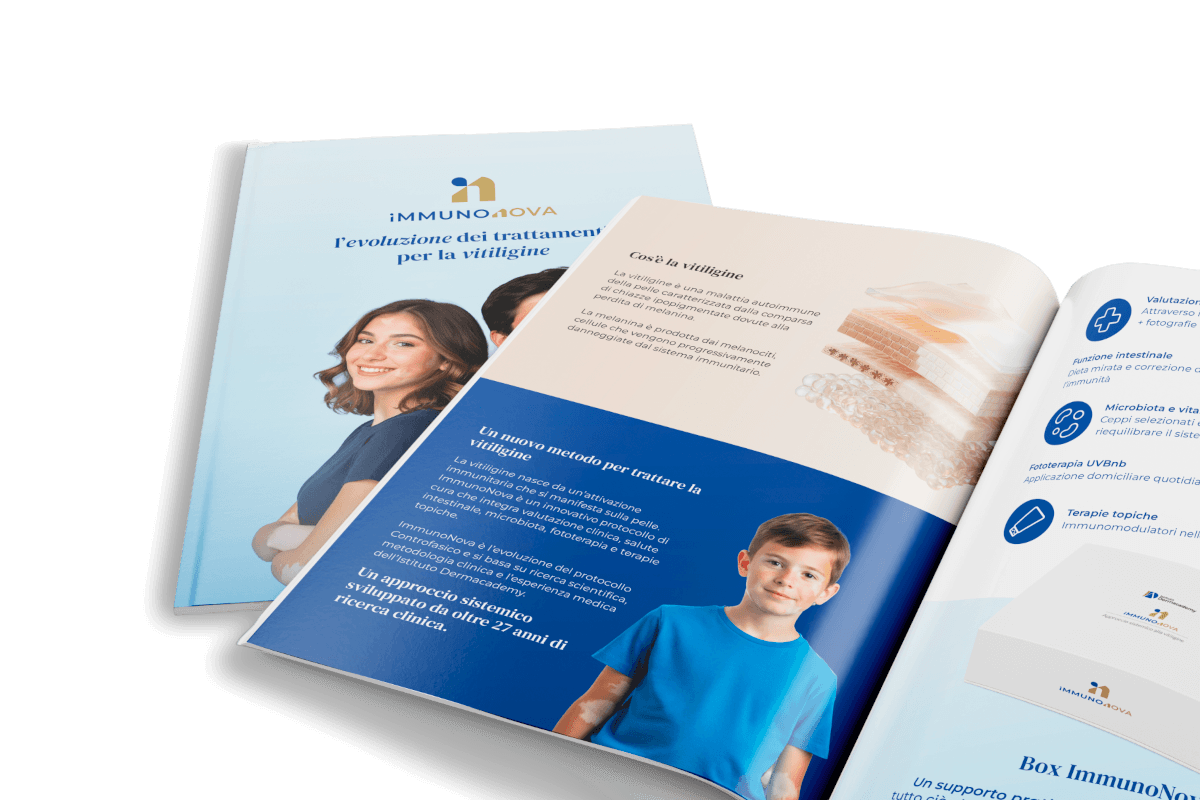

Probiotics and vitiligo: what science says about the role of the microbiota
In recent years, probiotics have become one of the most discussed topics when it comes to the immune system and intestinal health. Pharmacies and advertisements promote numerous products designed to “rebalance the intestinal flora,” but a fundamental aspect is rarely explained: not all probiotics have the same effect on the body.
For people affected by vitiligo, this distinction is particularly important. Certain bacterial strains can directly influence the balance of the immune system by regulating the cells involved in the autoimmune process that leads to the destruction of melanocytes.
Understanding the relationship between gut microbiota, the immune system, and vitiligo helps explain why many therapeutic protocols today integrate gut-directed strategies together with dermatological therapies.
The immune system in vitiligo: balance between attack and control
Vitiligo is an autoimmune disease. In this condition, the immune system attacks melanocytes, the cells that produce melanin responsible for skin color.
Two groups of immune cells play a central role:
-
Th17 lymphocytes, which promote inflammation and participate in the destruction of melanocytes
-
regulatory T cells (Treg), whose role is to control immune system activity and prevent autoimmune reactions.
In active vitiligo, this balance is altered. Th17 cells become predominant, while Treg cells are insufficient or less effective in controlling the immune response.
The relationship between these two cell populations therefore represents one of the main indicators of disease activity.
[IMAGE 2 – infographic of the immune balance between Th17 and Treg]
The role of the intestine in immune regulation
Approximately 70% of the body’s immune cells are located in the intestine. Here, the immune system is continuously in contact with the gut microbiota, the collection of bacteria living in the digestive tract that contributes to regulating many biological functions.
In recent years, several studies have observed in patients with vitiligo a condition of intestinal dysbiosis, characterized by:
-
reduction of beneficial Lactobacilli and Bifidobacteria
-
increase in pro-inflammatory bacteria
-
greater permeability of the intestinal barrier.
When the intestinal barrier becomes more permeable, molecules originating from the intestine can enter the bloodstream and abnormally stimulate the immune system. This process may contribute to fueling the autoimmune activity that characterizes vitiligo.
The sequence described in the literature is the following:
dysbiosis → increased intestinal permeability → immune activation → increase in Th17 cells → destruction of melanocytes.
Intervening on the microbiota therefore means acting upstream of the immune process.
Why not all probiotics are the same
In everyday language, people often speak about “probiotics” as though they were all equivalent. In reality, every bacterial strain possesses different biological characteristics and may have specific effects on the immune system.
Some strains:
-
stimulate the inflammatory response
-
influence intestinal motility
-
modulate immune balance.
For this reason, the choice of probiotic cannot be generic. In clinical protocols aimed at vitiligo, strains with immunomodulatory properties are selected, capable of:
-
reducing Th17 cell activity
-
promoting the development of regulatory T cells
-
strengthening the intestinal barrier
-
reducing systemic inflammation.
The probiotic strains used in clinical protocols
In the ImmunoNova Protocol developed at the Dermacademy Institute, five probiotic strains have been selected for their complementary actions on the immune system and the intestinal barrier.
Among them:
-
Lactobacillus salivarius – promotes the development of regulatory T cells and reduces inflammatory signals
-
Lactobacillus rhamnosus – supports intestinal mucosal immunity
-
Bifidobacterium animalis – contributes to the production of butyrate, a metabolite with anti-inflammatory effects
-
Lactobacillus paracasei – reduces the differentiation of Th17 cells
-
Lactobacillus plantarum – supports the intestinal barrier and reduces oxidative stress.
The goal is not simply to introduce “beneficial” bacteria, but to intervene simultaneously on different stages of the pathogenic chain linking the intestine and the immune system.
Probiotics and Vitamin D3: an immunological synergy
Within the therapeutic protocol, probiotics are associated with vitamin D3, which plays a key role in modulating the immune response.
Vitamin D3:
-
reduces the production of inflammatory cytokines such as IL-17
-
promotes the differentiation of regulatory T cells
-
contributes to maintaining the integrity of the intestinal barrier.
Probiotics and vitamin D3 therefore act synergistically: intestinal bacteria can increase the expression of the vitamin D receptor in the intestine, improving its biological effectiveness.
What we observe in clinical practice
Clinical experience with thousands of patients shows a fairly consistent pattern when acting on the microbiota within a complete therapeutic protocol.
In the first months of treatment, the following are often observed:
4–8 weeks
-
improvement in gastrointestinal symptoms
-
reduction of abdominal bloating
-
greater intestinal regularity.
3–6 months
-
stabilization of vitiligo patches
-
appearance of the first signs of repigmentation in the most reactive areas such as the face and neck.
6–12 months
-
progression of repigmentation in other body areas
-
stable improvement of intestinal symptoms.
It is important to emphasize that probiotics are not an isolated therapy, but rather one component of a broader protocol that includes phototherapy, topical treatments, and periodic clinical monitoring.
[IMAGE 3 – diagram of the integrated protocol: microbiota, vitamin D, phototherapy, and topical therapies]
The most common mistakes in probiotic use
In clinical practice, many patients arrive after already trying probiotics without obtaining results. The most frequent mistakes are:
-
using generic probiotics with non-characterized strains
-
taking doses that are too low in live bacteria
-
not combining them with vitamin D3
-
not correcting diet and intestinal disorders
-
using probiotics as the sole therapy.
Without clinical evaluation and without an integrated approach, probiotics are unlikely to produce significant effects on the disease.
Conclusion: why the intestine matters in vitiligo
Scientific research in recent years has shown with increasing clarity the connection between the gut microbiota, the immune system, and vitiligo.
The pathogenic sequence described in the literature links:
-
intestinal dysbiosis
-
increased intestinal barrier permeability
-
abnormal immune activation
-
destruction of melanocytes.
For this reason, acting on the intestine with targeted strategies, such as selected probiotics and vitamin D modulation, represents one of the fundamental steps in the most modern therapeutic protocols.
Vitiligo does not concern only the skin. It is the result of a complex immune balance involving the entire organism.
Would you like to understand whether the balance of your microbiota may influence your vitiligo?
A specialist evaluation can help identify possible intestinal dysfunctions and define a personalized therapeutic pathway based on the ImmunoNova Protocol.
Author: Dr. Giovanni Menchini